A collaborative email platform never exists in isolation. It operates within an information system that is already structured, often mature, sometimes complex. Central directories, identity federation, single sign-on, established security policies — your foundations are already there.
That’s why one of the decisive factors in any email migration project is the ability of the new solution to integrate smoothly into what already exists. No disruption for users. No unnecessary complexity for IT teams. Especially when email remains one of the core pillars of the information system, as highlighted by the 2025 Lecko study.
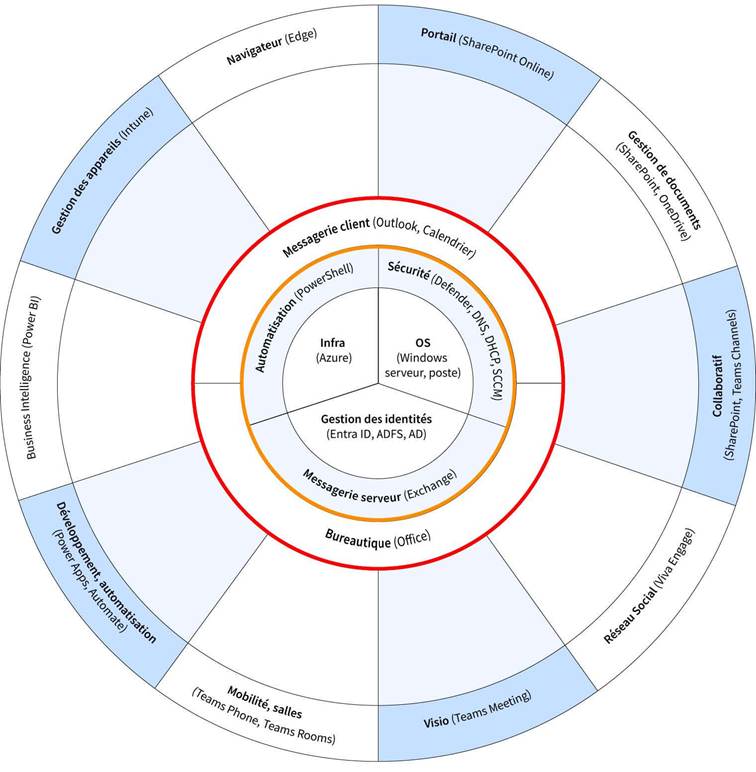
In this article, we look at how BlueMind integrates into your ecosystem across three key dimensions: directory services, authentication, and collaborative tools.
Let’s take a closer look.
BlueMind and Active Directory
In most organizations, user accounts, groups, permissions and passwords are already managed through Active Directory or an LDAP directory. BlueMind synchronizes directly with these directories, enabling automated, incremental and transparent user and group imports.
Passwords remain managed within your directory, ensuring centralized and consistent identity management. For IT teams, this means one reliable source of truth, simplified administration and full alignment with established governance practices.
Integration follows the real lifecycle of your organization. Existing accounts can be imported during the initial deployment, and from there, changes naturally reflect your operational reality: new hires, role changes, departures. Users logging in for the first time can even be provisioned automatically, without requiring prior manual configuration.
Additional directory attributes — including shared mailboxes or organization-specific fields — can also be handled through extensions or tailored configurations.
BlueMind adapts to your structure. Not the other way around.
Streamlined authentication with SSO and OpenID Connect

Many organizations are now centralizing authentication through a single identity provider. Starting with version 5, BlueMind natively supports OpenID Connect, making integration into modern identity architectures straightforward.
This allows you to rely on a third-party authentication server such as Keycloak, without complex custom development.
For users, single sign-on means seamless access to email and other business applications with one authentication step. For IT teams, it ensures consistent authentication policies across the system. Security mechanisms can evolve independently, without impacting the messaging platform itself.
In multi-entity or complex environments, this approach offers the right balance between flexibility and control.
Kerberos SSO for Windows environments
In Windows infrastructures, Kerberos authentication already structures access to internal applications. BlueMind integrates seamlessly into this environment. Users connected to their Windows session can access their mailbox directly via the browser, leveraging their Active Directory identity. The experience feels immediate and natural.
This integration relies on standard mechanisms already familiar to IT teams and respects existing security configurations. Users gain uninterrupted access without additional daily authentication steps.
Email as the gateway to your collaborative ecosystem
Email remains one of the few applications that stays open all day on users’ screens. Rather than forcing people to constantly switch between tools, it makes sense to turn email into the central gateway to the broader collaborative environment.
In daily workflows, messaging interacts continuously with other applications: launching a video meeting from the calendar, placing a call from a contact card, sharing documents directly from the mailbox. Collaborative integration ensures continuity. Calendar sharing, file collaboration and data exchange management extend naturally from existing workflows, without requiring users to rethink how they work.

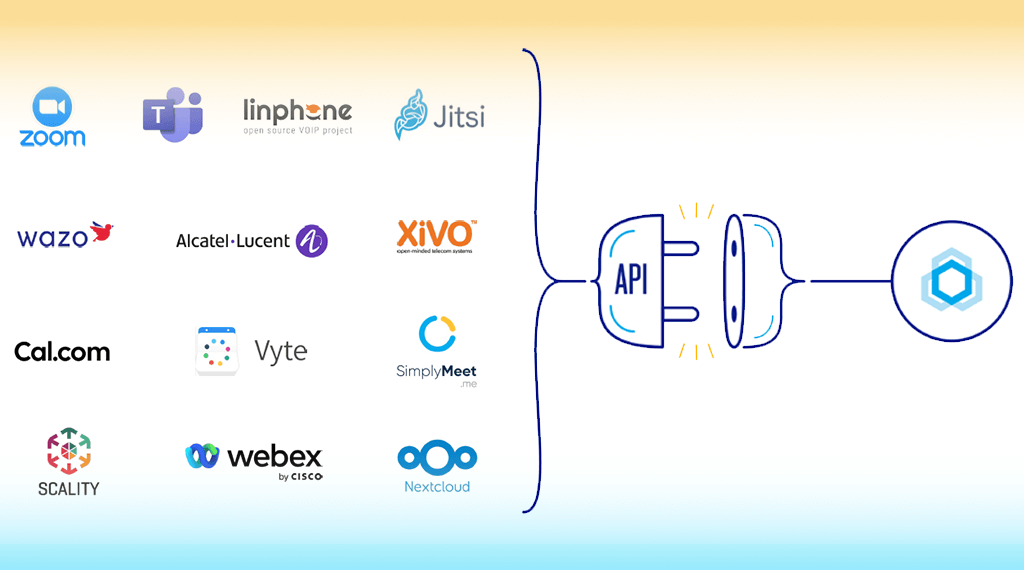
Designed with openness in mind, BlueMind integrates smoothly into both your current and future digital workplace. Its open architecture and APIs allow you to connect existing tools without friction. Your ecosystem can evolve over time while maintaining consistency and coherence.
This is why BlueMind has established itself as a leading messaging solution for a sovereign digital workplace. It is no coincidence that platforms such as Interstis, Jalios, Exo Platform, Orange Business Collaboration Suite, Jamespot, as well as portal solutions like B’Suite and W’Sweet, have chosen to integrate or rely on BlueMind.
Every organization has its own tools, constraints and ambitions. BlueMind adapts to your model.
Conclusion
BlueMind is built to integrate — not to replace what already works. Synchronization with Active Directory ensures centralized user management. SSO mechanisms simplify authentication. Integration with collaborative tools preserves continuity in everyday use.
Administration remains aligned with your existing practices. Users keep their familiar workflows. With native Outlook compatibility and AutoDiscover for streamlined deployment, migration projects can move forward smoothly, without functional disruption.
Choosing BlueMind means taking a concrete step toward operational digital sovereignty. Migration becomes achievable. Email remains under your control — deployed and operated in an environment you master, while benefiting from deep integration.
Built on interoperability, technological control and functional continuity, BlueMind enables you to deploy a sovereign email platform that fully supports real-world usage.
Yes — you have a choice.